tumblr_m6iem5DN9I1r65rllo1_r1_1280.jpg
tumblr_m6iem5DN9I1r65rllo2_1280.jpg
tumblr_m6iem5DN9I1r65rllo3_1280.jpg

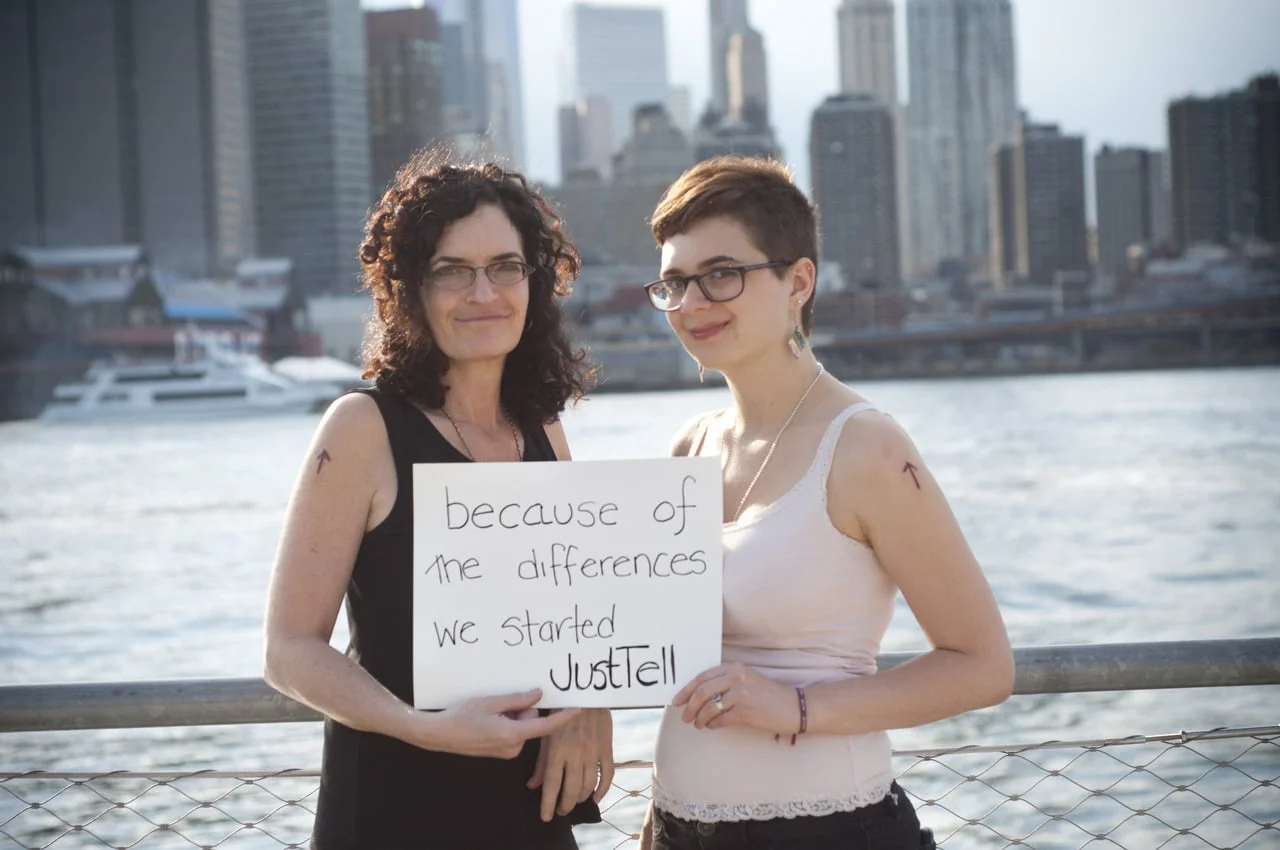
A powerful collaboration between our friends at Just Telland Project Unbreakable.Two incredibly important, empowering movements collide, with amazing results. Fantastic work by Grace, Vivian & Hannah.

projectunbreakable:

1) Hannah’s poster: I told. 

 “When I was eleven, I was sexually abused. I told my mom as soon as it happened, and we pressed charges against my abuser. My mom took me to speak to police detectives, and she testified for me in court. After being sexually abused I went through a period of time where I was uncomfortable with my body, and wore baggy clothes. There were times where it has been hard for me to be intimate with another person, but because the abuse had not been repressed, I was able to start healing from it soon after it happened. Having been sexually abused, -while unfortunate and something I wouldn’t wish on anyone- has made me part of who I am today. But I know that I would not have been able to move on from there if I had not told.”  

Vivian’s poster: I didn’t know I could tell.

Vivian was sexually abused as a child, but didn’t realize she had the right or ability to tell, and she actually blanked it out so she didnt even remember the abuse. It was 10 years before she remembered and disclosed that she had been molested repeatedly over 2 or 3 years. She suffered a lot during those years, without knowing what made her act out. Finally when she was 25, it all came back to her and her healing journey could begin. Vivian became a social worker who worked with kids who were sexually abused for many years. She also teaches new social workers to work with sexual abuse issues.

 She had her daughter, Hannah. Hannah was sexually abused at age eleven. 

2) Because of the differences, we started JustTell.

Inspired by her daughter’s strength and by how Hannah was able to let go of any sense of responsibility or blame for what happened to her, Vivian had the idea for JustTell. When she saw the difference between how she suffered over those ten years before she remembered and disclosed her abuse history, and how Hannah was able to let go of what happened to her once she let go of the burden of and told her mom, Vivian realized other kids needed to know that if they have been sexually abused, they need to choose an adult they trust and …just tell.

With the advice of many other professionals and teen focus groups online and in Hannah’s school, they started JustTell in 2007.

From the website JustTell.orgThe mission of Just Tell is to reach out to youth aged 8 to 17 who are being sexually abused in order to convey, in age-appropriate language, that: they are not alone, they are not to blame for the abuse and should feel no guilt or shame, and that they need to choose a trustworthy adult in their life and tell them about the sexual abuse. The secondary mission of JustTell is to educate and empower all youth around the issue of childhood sexual abuse.

3) You have every choice to use your voice.

 Hannah, shortly after her abuse, wrote a poem about her journey, which featured this line.

Although I told my family and police detectives that I had been sexually abused, it wasn’t until I was sixteen that I decided to tell someone my age. I realized after I told that I felt like a weight had been lifted from my shoulders, and it felt good to tell. I found out that though being sexually abused is my secret, it is also my choice who to tell it to. I wrote a poem after telling the first person my age, titled ‘A Secret You Don’t Have To Keep’ about deciding not to keep this secret, and wrote the words ‘Don’t ever say, you don’t have a choice/For you have every choice to use your voice’ as a message of encouragement for myself and others to speak up. Because unlike what abusers say, you do not have to keep their secret, and I know that in my experience I feel a sense of relief every time I tell.”

Photographed in Brooklyn, NY on June 6th.

Not sure what Project Unbreakable is? Click here.

Want to be a part of Project Unbreakable? Email us at projectunbreakable@gmail.com

Find us on Facebook & Twitter

View submissions here

Could the Penn State Abuse Scandal Happen Somewhere Else? Definitely

Coached into Silence director Chris Gavagan ’s interview with The Atlantic 

With the release of a damning, 267-page investigative report compiled by former FBI director Louis Freeh, the ongoing child sex abuse scandal engulfing Penn State University and former football coach Joe Paterno went from bad to worse, with possible negligence involving the sex crimes perpetrated by former defensive coordinator Jerry Sandusky giving way to a probable cover-up.

For Chis Gavagan, however, the contents of the Freeh report were hardly surprising.

A Brooklyn-based filmmaker, Gavagan is working on Coached Into Silencea documentary about sexual abuse in sports that includes interviews with experts, victims, and a roller hockey coach Gavagan claims abused him when he was a teenager.

To understand how Penn State fits into the larger context of sexual abuse by coaches—as well as how the university’s leaders could display what Freeh termed a “total disregard for the safety and welfare of Sandusky’s child victims"—The Atlantic spoke with Gavagan about the report, Paterno, and where the school goes from here.


What similarities do you see between the Penn State depicted in the Freeh Report and the cases of child sex abuse by sports coaches documented in your film?

You could white out every proper name in the Freeh report and apply it to institutions all over this country that have failed in their responsibility to protect children. Time after time, the evidence has shown the most powerful and influential decision-makers circling the wagons and conspiring to decide, "How are we going to handle this?”

Victims are the last possible priority. Over and over, you see the drive to keep it quiet, to put it “behind us” with the fewest possible people being aware of it. In many cases—particularly at schools whose pristine reputation is paramount—rather than making a successful coach go away, they have made an accuser or the accusations go away.

In one elite prep school featured in the film, several students who came forward about abuse they suffered were quietly dismissed. In other cases, there have been payments handed out, “hush money” to convince a parent pushing the issue to relent.

It would shock me if the same tactics have not been put into play with Penn State over the decades of Jerry Sandusky’s involvement with the program, which began in the late 1960’s.

What differences do you see between Penn State and the cases you’ve covered?

The difference is the documentation. In most other cases, there will never be a report. We will never see this evidence. We will never be privy to these discussions. Without the national spotlight, most of these institutions have been able to avoid the scrutiny of such an investigation. Often, a loophole in the law – such as widely varying state-by-state statutes of limitations—can provide another shield. If an institution can avoid, delay and intimidate long enough, they can make Penn State [vice president Gary] Schultz' 1998 e-mail wish “I hope it is all behind us” a legal reality.

Prior to the ubiquity of email, an institution would have just solved much of this problem with payoff for an accuser and a shredder for the incriminating documentation. In some ways, we are fortunate that technology has created more of a trail in these cases.

Generally speaking, how does something like this happen?

It takes a village to enable a sexual predator to continue unfettered for so long. The combination of ignorance of warning signs and willfully hidden information are necessary for these abuses to go on for decades.

Pillars of the community are given much more of a benefit of the doubt, but what has been demonstrated, unfortunately, is that nobody can be considered beyond reproach. The greatest masks of all are apparent good intentions and a smile. This is one of the most insidious aspects of these crimes. The stranger in the trench coat preying on children is the rarest of cases—the overwhelming majority are perpetrated by someone who is both trusted and known to the child.

In our film, we discussed with former Sports Illustrated editor Don Yaeger his process of researching his1999 cover article “Every Parent’s Nightmare.” In our interview, he quotes a pedophile as calling coaching “the last great candy store of opportunity.” Not only did the most powerful men at Penn State choose not to shut down Sandusky’s candy store when it was brought to their attention, but by allowing his continued access to all things Penn State they went above and beyond to ensure that it remained open for business and that the shelves were stocked with the sweetest bait a young boy could imagine.

Which specific details of the Freeh report most stood out to you, and why?

The coded, callous discussions of incidents that Schultz called “at worst sexual improprieties"—and the talk of needing to clarify to Sandusky his "guests’ use of the facilities"—is appalling. They refer to a child victim of rape as if he were a kid being punished for peeing in the pool. It shows a complete and utter disregard for other human beings.

The nameless boy in the shower was someone’s child.

Also, the fact that information was withheld from the board right until the last possible moment, time and time again, demonstrates the danger of a lack of accountability and oversight. [Penn State president Graham] Spanier, [athletic director Tim] Curley, and Schultz come across as the last men shouting that the Titanic is unsinkable, even as their lungs are filling with frigid water of the North Atlantic.

How does the disregard for children happen?

More often than not, this kind of disregard occurs in tiny dehumanizing increments. For a human being, no matter what is at stake to professionally or financially, to take actions that enable these abuses to continue, they must begin by not seeing the victim as a human. The farther you get away from that flesh and blood child—nameless and faceless—the easier it is for you to proceed.

There is a reason that the prosecutors in the Sandusky trial opened their case by showing photographs of the victims at the ages that they were when these crimes were committed against them—because it works. I was sitting in that courtroom, and to be forced to face the very real, very human toll of these crimes is unbelievably powerful.

The men in power at Penn State did not have to face that. They faced words, they faced an idea, and by facing only that I believe they were able to discount, to some extent, the horrors that were being committed on their watch. There are things that one must lie to themselves about in order to be a part of, if you are to live with yourself. I would imagine that sacrificing a child to the "greater good” of an institution is one such case.

The Freeh report concluded that Joe Paterno and other top Penn State officials covered up the sex abuse allegations against Sandusky because they were afraid of “bad publicity.” Is that unusual? Why or why not?

In the vast majority of these cases, “bad publicity"—and all the considerations that entails, specifically in terms of financial backlash—is the immediate concern.

For example, when you run an elite prep school and charge $33,000 a year for tuition—like one of the schools featured in our film—administrators will go to great lengths to prevent any evidence from coming out that could tarnish their reputation and thereby handicap their ability to charge such an astronomical amount. Schools also rely heavily on alumni donations. How willing do you think their alumni would be to write out generous checks if they were aware that some portion of that donation was going to fight to keep sex abuse cases from going to trial?

Spanier acknowledging in the Freeh report that their decision not to go to the proper authorities leaves them vulnerable is a rare peak behind the curtain of all decision-makers who have chosen the same course of action—or inaction. They explicitly knew the risks, yet they did it anyway.

If there were a fire on campus, there would have been no debate as to "how are we going to handle this?” The proper authorities to handle the specific situation would have been called immediately.

One of the most heartbreaking things in the Freeh report involves janitors who saw Sandusky molesting a boy in the Penn State football showers but did not report the incident for fear of losing their jobs. Was their fear reasonable? What kind of reaction do child sex abuse whistleblowers typically face?

Their fears were unfortunate, but more than reasonable. To ask the lowest men on the totem pole to be heroes where “great men” have failed is unfair. The lower you rank, the heavier the pressure of the edifice above you. The little people get crushed—and who can rank lower than a child? Powerless. No money. No influence. The greatest action taken in your defense by anyone at Penn State was a slammed locker.

In a case featured in the film, it was the assistant coach who was the whistleblower, going to his superiors to report what he knew to be credible accusations against his head coach. As thanks for his speaking out, the administration of the school began a smear campaign against the assistant in the press, even going so far as to remove the whistleblower’s picture from the school’s hall of fame, while the picture of the head coach—who would eventually plead guilty to two counts of child rape—still smiled from his plaque within a glass case.

Personally, my own experience of reporting my coach and abuser to the league is both subjective prism through which I view reporting, and also a glimpse of the pressures that can be brought to bear. Although the director of the league believed me when I reported my coach, the next words out of his mouth were problematic: “I know you love this league too … and when this gets out they’re going to shut us down.” No so subtly, the victim had been handed responsibility for the potential closing of his beloved league. They dismissed the coach that night, but did no more. During the production of Coached Into Silence, I would discover that he took his whistle six miles down the road and continued coaching for years. The statute of limitations in my home state of New York had expired, and there was nothing I could do.

The Freeh report also blamed a “culture of reverence for the football program.” What do you make of that?

In an interview that we conducted in 2009 with Cardozo law professor Marci Hamilton, she discusses the shadow side of a successful coach. Although a successful coach is a wonderful for any organization, there is a danger when that individual’s success has begun “a legacy of donations for the institution.” Sandusky masterfully exploited the cover provided by his own gridiron success, and those in power who surrounded him willingly provided the ongoing shield with the Penn State imprimatur—with one apparent and unenforced condition: Don’t do it here.

We have cases in the film where the abusers have not just won many games or championships, but are gold medal-winners or enshrined in their sport’s Hall of Fame. For a particular institution or sport to admit and acknowledge abuse or a problem with someone who has risen to these heights and has been given every accolade imaginable takes an extraordinary amount of fortitude.

Unfortunately, that kind of courage is rare. More often than not, a literal or figurative cost benefit analysis is done, an institution tabulates the price of potential lawsuits, and the decision is made to do all that is within their power to make the problem go away without reporting it to the police.

A report estimated that the Sandusky case could ultimately cost Penn State $100 million in civil damages. What is the psychological and emotional cost to Sandusky’s victims?

The true human cost will never be accurately tallied. Having personally lived through the effects of these abuses on a victim—and studied all that there is to study about them—I can say that not all who fall prey will live long enough to be called a “survivor.” Among Sandusky’s victims, there are bound to be those who have taken their secret shame to the grave, dying by the drugs or alcohol that they took to cope with the abuse, or succumbing to depression and suicide. The suicide rate among victims is many, many times higher than average.

What lessons can Penn State—and the rest of us—learn from this tragedy?

When any man—or any college sports program—becomes more powerful than the institution itself, corruption is sure to follow.

As someone who remains a true sports fan and has enjoyed the benefits of being involved, I can’t demonize that world. Yet when any aspect of an organization becomes a money-printing machine, the tail begins to wag the dog. For example, Phil Knight’s hero worship [of Paterno] cannot be viewed independently of knowing where his bread was buttered.

Penn State remains an incredible educational institution, turning out many of this country’s best and brightest minds. But some of the deepest soul searching that must be done at the school regards exactly how much power they have ceded to football. They have sacrificed too much at the altar of the sport.

Should Penn State take down its on-campus statue of Paterno?

To choose to continue to honor the man as the winningest football coach and the architect of his “grand experiment” is to ignore this truth: For all of the good he may have done, for all the lives that he may have impacted in a positive way, his grand experiment was a failure. The cult of personality, the total lack of accountability, the man who could tell his superiors exactly when he would be stepping down existed in a poisoned atmosphere of his own creation. The power centralized in one man, immortalized in bronze, made a true chain of command, of checks and balances, impossible. When it is a controversial decision to paint over someone’s halo, we are ignoring the man’s humanity, not honoring it. The disregard for the humanity of the victims—"some Second Mile kid" and “the boy in the shower"—is how this was allowed to occur in the first place.

My wish is for the statue to be taken down and returned to the workshop where it was created, then have Paterno’s skyward-pointing index finger repositioned in front of his lips – the exhale of a quiet, craven "Shhhhh.” Put that new version on a flatbed truck and tour the nation, with those who have survived childhood sexual abuse speaking at every stop to educate and raise awareness of the issue while warning against the hubris that led a “great man” to believe that his own reputation mattered more that the lives of children.

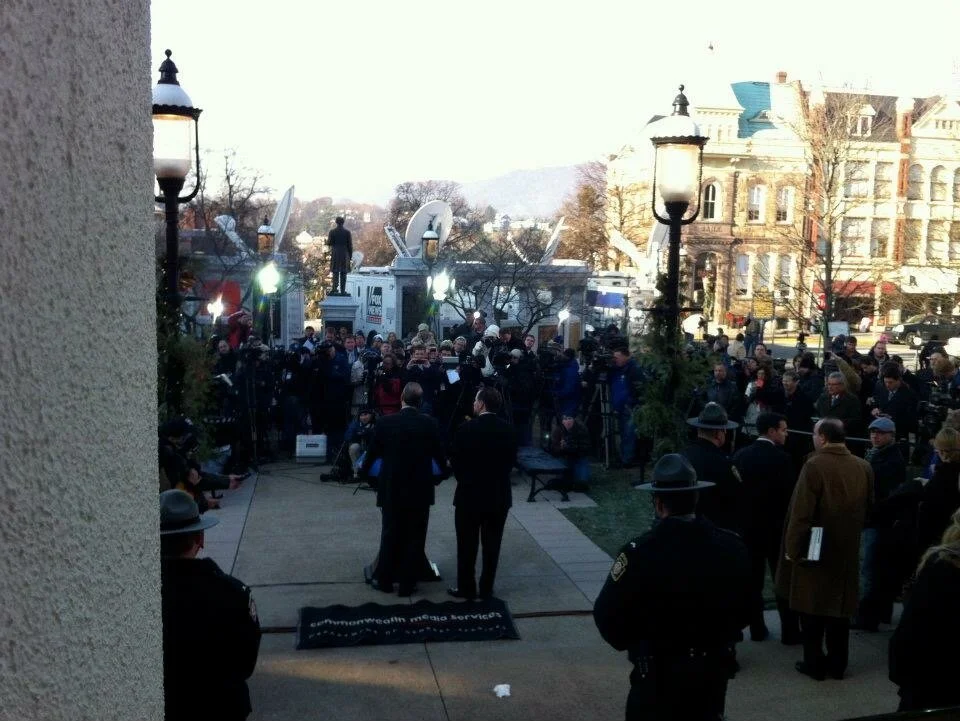
It was an honor to be involved with such an important project which has already helped so many.
 projectunbreakable:

Chris Gavagan is a Brooklyn filmmaker working on a documentary about sexual abuse in sports called “Coached into Silence”. In this …

It was an honor to be involved with such an important project which has already helped so many.

 projectunbreakable:

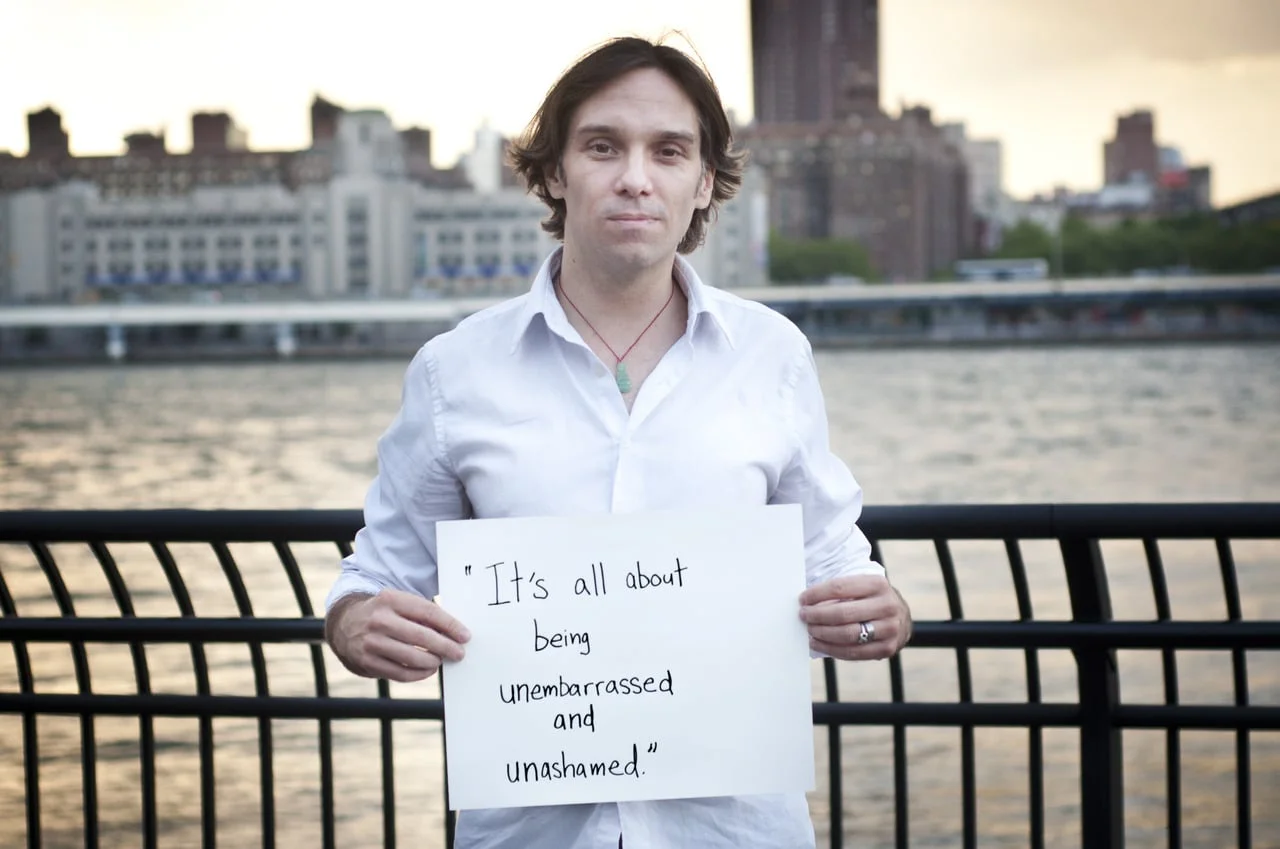
Chris Gavagan is a Brooklyn filmmaker working on a documentary about sexual abuse in sports called “Coached into Silence”. In this documentary, he asked his old coach to be interviewed, pretending the film was more along the lines of honoring him. He confronted this man, who abused him as a child, asking “what he felt about the abuse he caused” while on camera. The quote on the poster, “It’s all about being unembarrassed and unashamed,” was the coach’s response - what I’m assuming as a very guilty, very caught off-guard one. Chris currently travels to film survivors for Coached into Silence. Find more info here.

Photographed in Brooklyn, NY on June 6th.

Not sure what Project Unbreakable is? Click here.

Want to be a part of Project Unbreakable? Email us at projectunbreakable@gmail.com

Find us on Facebook & Twitter

View submissions here

My aim is true.: Prep-School Predators The Horace Mann School’s Secret History of Sexual Abuse

chrisgavagan:

I posted this New York Times Magazine article yesterday on the Coached into Silence Facebook page, but the Pandora’s box of broken silence ensures that there is much more to follow.

There are so many aspects of these Horace Mann revelations that echo what we have seen at institutions…

Coached into Silence featured in the New York Times

New York Times article "Coaching Gives Abusers Opportunity and Trust"

Chris Gavagan, a filmmaker who is making a documentary on sexual abuse in sports called “Coached Into Silence,” based largely on abuse he said he endured from a youth hockey coach starting when he was 14, is among those who believe the problems for boys in sports are much larger than suspected. Not only does it happen more than people want to think, he said, but the culture of sports works against a child trying to report it.

“Sexually abused boys are going to be the most silent group,” Gavagan said, adding that the allegations involving Sandusky, if true, fit a familiar pattern.

“With the whole macho atmosphere of sports, it seems to be the perfect storm of circumstances,” he said. “There’s the cult of personality that keep these guys the kings of their little kingdoms, the sense of hero worship. The kinds of things Sandusky was offering those boys is every boy’s dream — trips to bowl games, going down on the field. It allows these things to go on for a long time. And when you don’t tell someone the first time it happens, you already feel complicit.”

Gavagan has become involved in the rush to respond to the allegations against Sandusky and Fine, including testifying in front of a Pennsylvania legislative committee supporting laws requiring people to formally report to the authorities any allegations of sex abuse.

Harrisburg, PA

Testimony before the Pennsylvania House Children and Youth Committee in support of increased mandated reporting of childhood sexual abuse & opening a “window” in the statute of limitations. 

“I want to thank you all for being here, for convening this meeting, and for listening. 

My name is Chris Gavagan and for the past two years I have been producing and directing a documentary called Coached into Silence which deals specifically with the sexual abuse of boys by their coaches. The silence referred to in the title is threefold: the silence of shame victims can find themselves shrouded in, the silence of institutions protecting themselves before children, and finally the legal silencing of the victims in their search for justice. 

The process of first researching and then filming Coached into Silence, which is ongoing, would have been enough to make me a lowercase “e” expert on the subject of child sexual abuse, yet my expertise is of the decidedly capital “E” variety.

I am today because I am also an invisible, untabulated statistic. In my quest to be a better hockey player, having just turned fourteen years old, I skated down the wrong block in my neighborhood and into the carefully laid trap of a serial child molester. On this tree-lined street, a street just like yours, I would become the victim of an uncounted crime, perpetrated by a unaccountable criminal. 

That day is the B.C./A.D line of demarcation in my life. My childhood ended on a Fall day in 1988 and that was that. I was exposed to everything that a parent would try to protect their child from. An adult world, a darker world, a world that is cruel and obscene. A world where you will be lied to and used, all the while being told that it was for your own good. One “It’s okay to curse here, we’re all guys” at a time. One beer at a time. Or one dozen. One Playboy at a time. One glimpse of pornography at a time leading the way for a hundred more. One “massage” of a pulled muscle at a time. A child in the hands of a polished master manipulator, who had perfected his grooming process over decades. 

Fifteen years ago I was certain that I would take this secret with me to the grave. I had resigned myself to a life as Damaged Goods. As someone who brought nothing but pain to anyone foolish enough to care. I had also resigned myself to life as a liar, because from the moment you first answer the question “Is everything okay?” with “Yes” you have lied about something that is fundamental. Those lies and the echoes from those years of abuse poisoned every single human interaction that I had for a decade. That I am not counted among the other statistics…the addicted, the incarcerated, the incapacitated or the suicides, is it’s own miracle. 

The crimes that occurred in & around State College are appalling, heartbreaking andanything but unique. The nation as a whole seems to be paying attention because of the celebrity status of the names & institution involved. Yet the scale is always the same to the victims. The loss of innocence, the shattering of trust, the sense of betrayal, the shame…occupies every inch of its container. “Grief fills the room up of my absent child”, said Shakespeare. Both my parents & their youngest son would concur. 

In directing & producing my film for the last two years our research has introduced us to thousands of similar cases. All that changes are the proper names for the actors, but the roles played are the same. The pedophile is no doubt the lead, but without the supporting actors this tragic show would have a very short run. Without the willful blindness of the Head in the Sand Ensemble, the “letter of the law” of the Moral Minimalists, the excuses proffered by the Apologists, the Moneymen jangling their thirty pieces of silver backstage, and the uncritical praise of the Hero Worshipers there would be no show at all. 

The Sandusky horror show has made itself a Broadway performance of ‘How Not to Handle a Child Rapist in Your Ranks", but trust this: the curtain rises on this disaster of dramaturgy in Community theaters, in every community, every night. All the world’s a stage for this particular play. In every place that there is a hierarchical structure and a chain of command to be followed…whether in schools or sports leagues, our churches to our military to our families themselves..bucks are being passed, free passes are being given and all in the name of protecting a reputation or a brand, a legacy or a surname. 

In these cases, bystanders are the load-bearing walls of the child rapist’s house of horrors. Without their support, the crimes would collapse in on the criminal almost immediately. Instead, each head turned away, each excuse offered, each whispered benefit of the doubt that it was “just a one time thing” or worse…each willful coverup of a known crime adds up to a generation of children used, raped, sodomized and eventually disenfranchised and silenced by laws that failed to protect them in the first place.

The Law is supposed to function as a system of incentives, which incentivize us to behave responsibly, or face the system of accountability which is in place. It’s why we wear our seat belts. In fact it’s why we have them at all. So buckle up, I’d like to show just a few moments of interviews that I conducted with my own former coach and abuser. A man that I did report to the league to end his access to children. A league that did fire him, but did no more, allowing him unfettered access to a whole new crop of young boys, while coaching just six miles down the road. Prior to this interview, I had not had contact with him for nearly 15 years. 

(I then played four minutes from interviews with my own abuser. His admitting sexual abuse and justifying it by calling it a “lesson”. His concern that doing this interview could put him in jail. His relieved laughter when the issue of New York’s statute of limitations–age 23–is raised, and then this man walking away, fading back in to his neighborhood.)

Coached into Silence is not a monster movie. The man that you met in that video would—to this day–be described by dozens of people around him as “the nicest guy you’ll ever meet”  You’ve seen that face. There are no horns on that head. You’ve seen that smile; there no fangs among those teeth. Yet the sound that has persevered longest & recurred to me the most often in my life is those teeth. The sound of those dentures being removed. 

The wet clicking sound of a serial child sexual predator moving in on his prey. When he was sure that a just-turned-fourteen-year old had consumed enough alcohol to pass out…after countless hours of shock & awe bombardment of pornography. After months of methodical grooming, semi-conscious, I looked down to see the bald head of my hockey coach…while the wet, clicking sound of dentures being removed boomed in my ears. It still does. It always will. 

Because I eventually reported the man that you saw on that screen mere months beyond an arbitrary statute of limitations in my state, he–who explains performing oral sex on children as a lesson—lives freer than I have been any day since the age of fourteen. 

I must add, that after sexually abusing children for a minimum of three decades, that man would also pass any background check in America. The law says: Unprosectuable, unregistered, unrestrained.  His neighbors will not see a red flag on any registry warning them to keep their children away. Just as crucially, without the simple truth that victims of these crimes can so easily provide, law enforcement will continue be forced to fight these crimes blindfolded.

In the world of Homeland Security, the mantra “See something, say something” has gained traction and proven effective. Yet we are missing an entirely different and much more prevalent terrorism. When it comes to the crime of sexual abuse of our children, “See something, say something” has too often been replaced with “see no evil, hear no evil, speak no evil.” This is not good enough.  

Maya Angelou writes: “History, despite it’s wrenching pain, cannot be unlived, but if faced, with courage need not be lived again. The key phrase is "if faced with courage”.

When a child’s future is hanging by a thread, there can be no margin for error. We must face the wrenching pain of what we see or suspect with courage–and make no mistake—the difference can mean life or death to a child 

My documentary focuses on boys who were sexually abused by coaches because I was one of those boys. Life handed me and so many others that narrative, yet the statistics for girls are even more staggering. 

Two days ago, my wife & I saw the face of our daughter for the first time, in utero. 

We will meet her early this spring. When that day arrives, I need to be able to look into her eyes and know that I am doing everything that is humanly possible to keep her safe. Just as you need to be able to go home to your own children, to see your own nieces & nephews, your grandchildren….and look them in the eyes and know that you are facing this issue–with courage. That you are doing everything within the power your elected position provides to keep them safe. You must answer to those eyes. Today you are a step closer. You are facing this issue with courage today by being here, by convening this hearing, by lending us your ears and your attention this December day.

If protections are strengthened and bills become laws enacted, come springtime your courage to look at the tragedies surrounding Penn State and provide remedies can be the cause of the thaw that turns the tide of this epidemic forever.

Moral minimums will not do that. Passing the buck will not do that. Denial will not do that. Heads in the sand will not do that. Wishing it would go away will not make it so. The time is now to face these troubled and tragic histories with courage.

History is being written every day, with every choice. Every action & every inaction. You have the power to write a safer & more just future wherein you have demonstrated that the protection of our children is paramount. Where you have done better than the moral minimalists and their “I wish I had done more"s. You are all here today, and you are listening. That gives me hope that all of you; elected to serve the people of Pennsylvania, might use this tragic moment as an opportunity to do the right thing. By leading by example. By facing this with courage these dark days can be transformed into a light. If sunlight is the best disinfectant, the time is now to unshutter and open a window provision in your statute of limitations. Let the light of justice, the light of hope, and the light of truth lead the way. 

Thank you for your time." 

I found the full episode of Anderson Cooper’s “State of Shame” episode online. You can see Bravo John Matko, the inspirational Tammy Lerner of Foundation to Abolish Child Sex AbuseMarci A. Hamilton, Keith Smith, author of Men in My Town…and I roll in around the 11 minute mark. Chris

As shocking as sunrise

The day the nation awoke to learn of the charges against former Penn State defensive coordinator Jerry Sandusky the one reaction that I was unable to muster was shock.

Not because we had been following the developments regarding Sandusky since March (we have), but because of the 2+ year process of research & production for Coached into Silence. 

We had investigated hundreds of cases and those cases were chosen from among thousands of others which we could have chosen to pursue. Dozens more every day. Nearly point by point, any of these cases only distinguish themselves from the events at Penn State by the proper names involved.

There is a template which you could lay over nearly every story where an institution has chosen to protect itself rather than the children which fits PSU all too well. There are countless Joe Paternos, following the letter of the law and doing no more. There are untold numbers of Mike McQuerys. There are Jerry Sanduskys in every town, in your town. The story broke and, as ever, I was heartbroken for the victims and their families. The story broke and I was outraged yet again by the protecting of the ‘brand’ while children are thrown to the wolves. The story broke yet what I could not be, was shocked. 

Given what we know about predators of this sort, tragically the only thing that could shock me in this case would be hearing that the number of boys who fell victim to this man doesn’t eventually approach triple-digits.