The Letter

When I decided to reach out to my former coach, having had no contact with him for over a dozen years… I sent the following brief letter:

“Dear _____

I am a key contributor on a documentary project centered around mentors and influential male role models over generations. The project is about the men who made us what we are today.

I would love to interview you on camera about your influences and role models growing up, the lessons that you learned, and how you passed those lessons on to future generations.

It would probably only take an hour in total, and there would only be a crew of one: me. You have obviously been one of the most important male influences in my life, and taught many lessons in hockey and in life in general.

If it sounds interesting and you would be willing to be involved, please call me at your earliest convenience so we can set up a time to sit down and do it. Within the next two weeks would be ideal to meet deadlines, but there is some flexibility.”

Three days later my phone rang, and caller ID informed me that the response to my letter had come. I could not bring myself to pick it up.

Voicemail received.

“Chris! It’s ____! So good to hear from you my buddy. I’m so proud of what you are doing. Thank you for saying all those nice things. I’d be honored to do the interview! Gimme a call alright? We can pick a day to do it soon. Thank you again. Okay. Talk to you soon ______.”

Why that last BLANK, you may wonder?

Because that was when he addressed me, on my voicemail…by the name of a different boy.

I had been unsure if I would actually follow through until I heard that name.

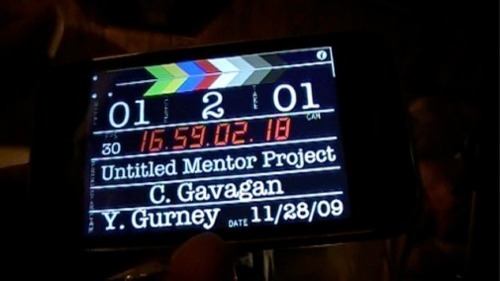
Before there was a Coached into Silence, there was this Untitled Mentor Project. Before there was a professional crew, I went in alone.

Armed with 2 cameras and the truth.

There are the stories that we write...

There are the stories that we write...


…and there are the stories that write us.

A chance meeting with a hockey coach over twenty years ago uniquely qualified screenwriter Christopher Gavagan to tell this nonfiction tale.

In producing & directing Coached into Silence, Gavagan tells the stories of a diverse group of young athletes from every corner of this country whom the system failed to protect. Far more sinister than those failures of prevention, this documentary will shed light on the organizational, institutional and legal systems which have conspired in attempting to silence the victims for life while protecting profits, reputations and in some cases, the predators themselves.

These courageous survivors refuse to be silenced.

Coached into Silence will show a way to take back authorship of the rest of our lives, while writing a safer and more just future for the next generation.

When prevention fails, the children pay the price.

Death and the Maiden

Sixteen years ago, I bought a marble notebook, which I promptly filled. What was contained in those pages, were notes for something called ‘Adam’s Big Day!’ and it felt like a suicide note.

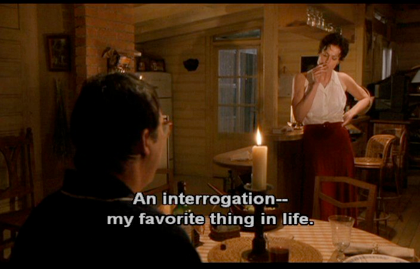
Those scribbled notes would, over several years, evolve into a screenplay called Apostrophe. What I must write about tonight is  a particular moment that has been present in every incarnation, every draft. In that story there is a beat before a meticulously planned confrontation and videotaped interrogation of an abuser by the abused, that had been years in the making. That moment has always been labeled: Death & the Maiden. In the script, before he knocks on the door of the perpetrator of the crimes that he endured, he steels himself with a deep breath and mutters the words aloud to the only person who knows,  cares or can hear “Death & the Maiden.”

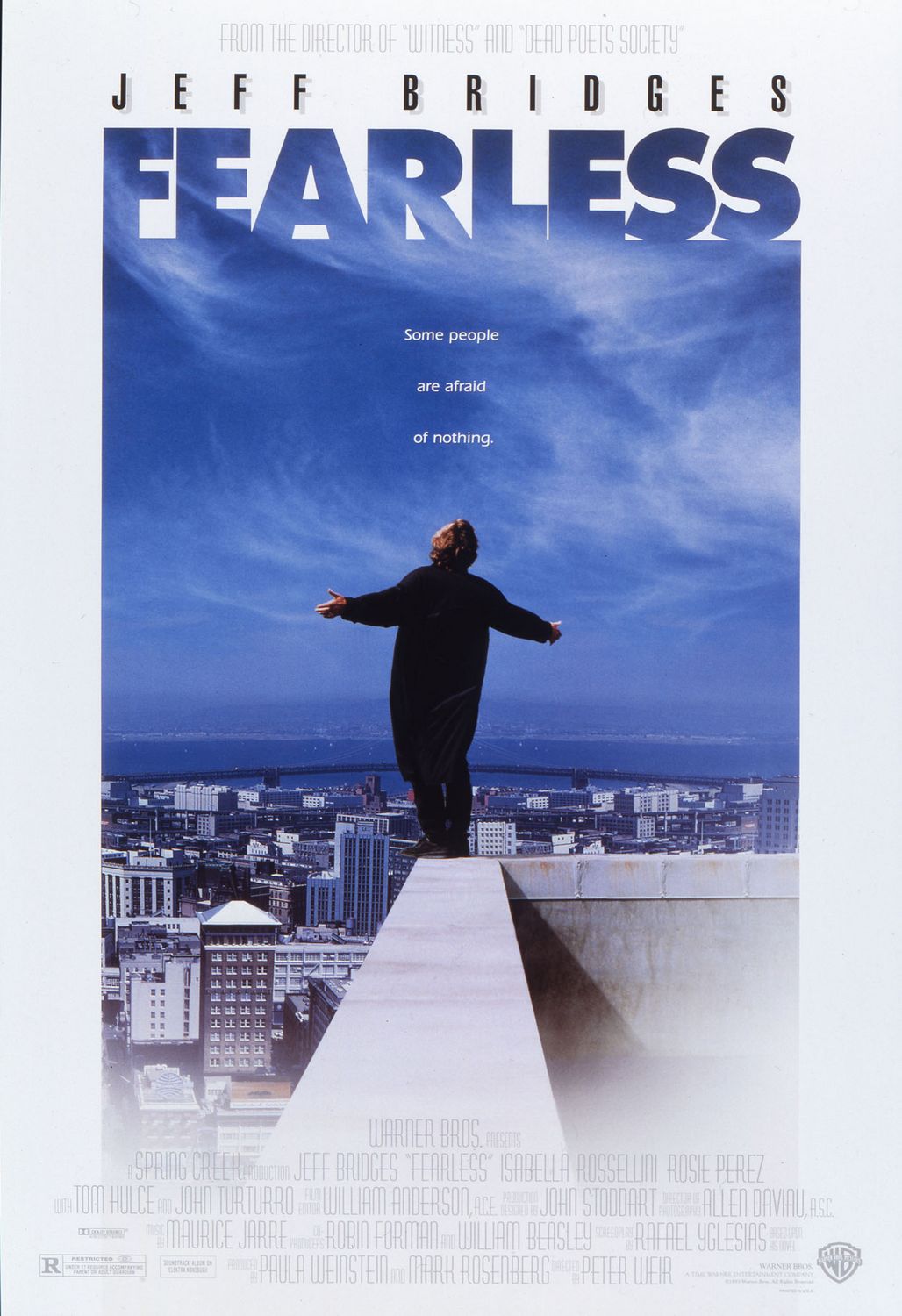
In 1998, when I was 23 years old, I attended a screening at New York’s Town Hall of Les Miserables, the latest adaptation for the screen by the writer Rafael Yglesias. When the film and the Q & A session had finished, I made my way to the front. I heard myself saying “Thank you for being here tonight, thank you for Fearless, and thank you for Death & the Maiden.” The entire interaction was perhaps three seconds long, but it felt important for me to let this writer know that his work, both original and adapted, was important to me as well. I was in NYU at the time and just finding my voice in all possible ways. As a writer, as a fledgling filmmaker, as a human. Mr. Yglesias received the words kindly and I left it at that. I said all that I was capable of saying in that moment.

Death and the Maiden; Schubert to Dorfman to Yglesias, stayed with me. I had daydreamed about getting my answers, about saying what I needed to say and reversing the old power imbalance  during a filmed interview with one criminal in particular for fifteen years.

Tonight, that daydream became a reality. The non sequitur below, a decade and a half in the making, understandably passed without comment.

Via Twitter rather than on an aircraft carrier: A monumental mission accomplished moment.

Someday I will write tens of thousands of words about this experience. Minimal amounts of that, I’m sure I will share here. Forgive the disjointed nature of this. For once, I allow myself that.

Tonight I will breath.

Just as the unfinished, desperate purge & plea of Adam’s Big Day was the germ of the script Apostrophe, the embryonic Untitled Mentor Project finally grew up tonight to be exactly what it should be: the feature documentary Coached into Silence.

What was once my thinly veiled fiction about shame & vengeance, is now in fact about only the truth and how that truth can serve a greater good.

Life imitating art? Art imitating life? Artless self-fulfilling prophecy/collision of reel & real life?

It was preparation by pre-visualization. It was practicing how you intend to play.

Just like my coach taught me.

Heart of Darkness.

“Everyone gets everything he wants. I wanted a mission, and for my sins, they gave me one. Brought it up to me like room service. It was a real choice mission, and when it was over, I never wanted another.
“Part of me was afraid of what I would find and what I would do when I got there. I knew the risks, or imagined I knew. But the thing I felt the most, much stronger than fear, was the desire to confront him.”
“I was going to the worst place in the world and I didn’t even know it yet. Weeks away and hundreds of miles up a river that snaked through the war like a main circuit cable plugged straight into Kurtz. It was no accident that I got to be the caretaker of Colonel Walter E. Kurtz’s memory any more than being back in Saigon was an accident. There is no way to tell his story without telling my own. And if his story really is a confession, then so is mine.”